

Cook Out Careers: Pay, Benefits, Hiring & How to Apply
Cook Out hires for entry level roles like crew member, cashier, and cook, plus management positions including shift leader, assistant manager, and general manager. Hiring happens store by store rather than through a central portal, which changes how you should approach applying. This guide covers realistic pay by role, age requirements, benefits, the application and interview process, what training looks like, and the genuine pros and cons of the job.
Quick answer: Cook Out hiring is handled store by store each General Manager reviews applications and makes the final call for their own restaurant. Entry level pay typically runs $12-$16/hr, most locations pay weekly, and the fastest way in is usually walking in between 2-5 PM and asking for the GM directly, not applying online and waiting.
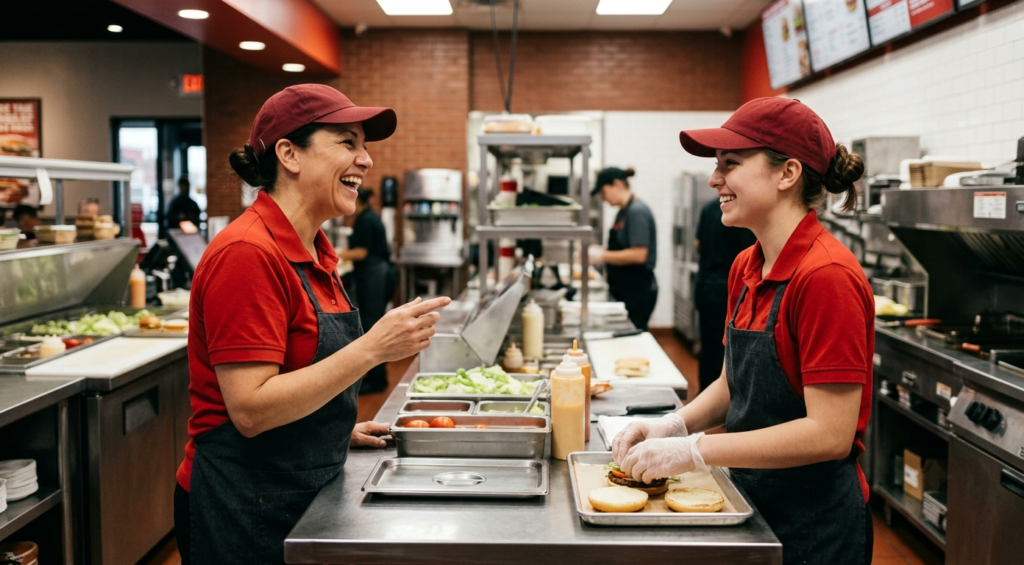
Cook Out doesn’t run hiring through a centralized portal the way larger chains do. Each restaurant’s General Manager handles hiring for that specific location: reviewing applications, conducting interviews, and making the final call. That’s also why two locations close to each other can have noticeably different response times. One might hire the same day; another might take a week if they aren’t actively short staffed. Neither is unusual it just reflects that store’s current staffing need.
Because of this, applying in person and being clear about your available hours tends to get a faster response than submitting an online form and waiting.
The Hiring Process, Step by Step
- Submit an application, either in person or online where the location supports it.
- The General Manager or a shift manager reviews it, typically within a few days.
- A short interview covering availability, prior experience, and how you handle busy periods.
- A background check for most positions, particularly anything involving the register.
- A job offer with pay rate and starting schedule.
- Orientation and station training before your first solo shift.
“Crew member” gets used as a catch all on a lot of job boards, but inside an actual Cook Out location, the floor splits into distinct stations, and which one you’re working changes the shift completely.
| Role | What You’re Actually Doing | Best Fit For |
|---|---|---|
| Cashier / Window | Taking orders at the drive thru speaker or walk up counter, running the register, handling cash and card payments, answering menu questions on the fly. | People who are quick talkers and don’t get rattled when six cars are stacked up at once. |
| Grill / Line Cook | Char grilling burgers and hot dogs, working the fryer, chopping BBQ, assembling Trays to spec under a ticket timer. | People who’d rather put their head down and move fast than talk to customers all shift. |
| Prep Cook | Portioning and prepping ingredients before and during the rush so the line cooks never run dry mid shift. | People who like a steady, repeatable rhythm rather than constant customer contact. |
| Shake Station | Building milkshakes to order across 40+ flavor combinations, keeping the machine clean and the toppings stocked. | People who don’t mind a sticky station and can keep pace when shake orders spike with the dinner rush. |
| Shift Leader / Crew Trainer | Running a shift without a manager physically present, training new hires on stations, troubleshooting when something breaks. | Reliable crew members who’ve already proven they show up and know every station, not just one. |
| Assistant / Co Manager | Owning labor scheduling, inventory counts, opening or closing procedures, and being the first call when something goes wrong on shift. | Former crew who’ve shown they can manage people, not just product. |
| General Manager | Full P&L responsibility for the store: hiring, food cost, labor cost, equipment upkeep, and being accountable for every shift even when they’re not on the clock. | Long tenured employees who want ownership level responsibility without owning the franchise. |
| Maintenance Technician | Keeping fryers, grills, ice machines, and HVAC running across one or several locations, often on an on call basis. | Experienced techs who want skilled trade pay without working the front line. |
Most new hires don’t get locked into one station forever. Because Cook Out runs small crews per shift, especially overnight, you’ll typically get cross trained on at least two or three positions within the first month, partly out of necessity and partly because management wants people who can fill any gap when someone calls out.
Cook Out is genuinely known for promoting from within rather than hiring managers from outside the company, and most General Managers can point to the exact crew position they started in. The ladder usually looks like this, though not everyone climbs every rung in order some stations feed directly into Crew Trainer without passing through every box below.
How fast someone moves through each step depends more on store staffing needs and individual performance than on a fixed schedule. A store that’s short a shift leader will move a strong crew trainer up quickly; a fully staffed store with low turnover will move more slowly regardless of how ready someone is. Treat any specific “promoted in X months” figure you see online, including ones on this page, as one person’s experience rather than a guarantee.
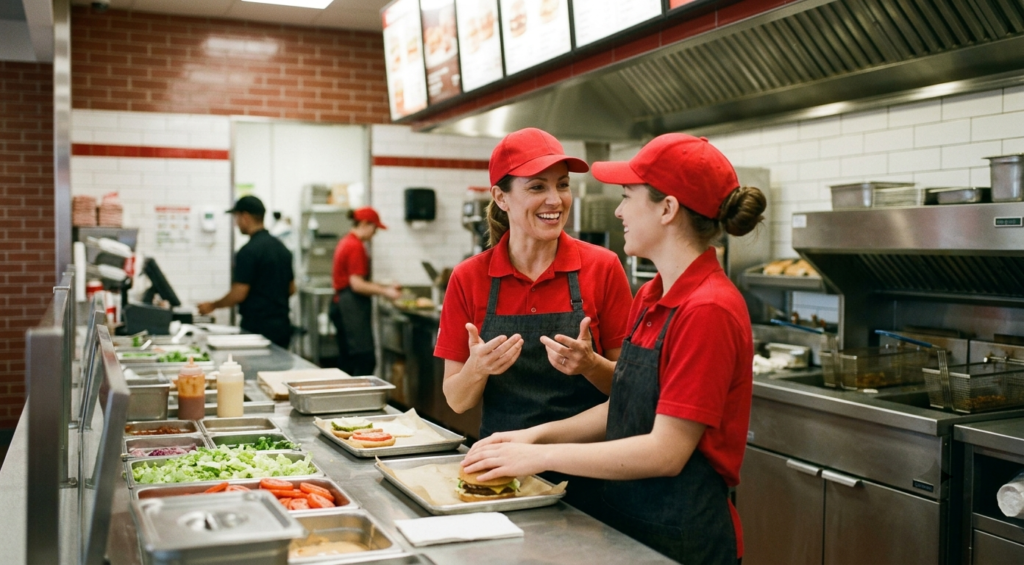
Pay figures for Cook Out swing more than people expect between sources, mostly because the company doesn’t publish a single national pay scale, and because location genuinely changes the number. A crew member in a small North Carolina town and one working a high volume Atlanta or Charlotte location can be a few dollars apart on the same job title. The ranges below reflect what’s commonly reported across multiple current pay sources, not a single number to expect everywhere.
| Role | Typical Pay | Notes |
|---|---|---|
| Cashier / Crew Member | $12 – $16/hr | Bottom of the range is more common for first time workers; top of the range usually means tenure or a high cost of living market. |
| Line / Prep Cook | $12 – $14/hr | Line cooks who can run the grill solo during a rush tend to land at the higher end faster than newer hires. |
| Shift Leader / Crew Trainer | $14 – $18/hr | Usually the first paid step up before a formal management title, and the fastest one to earn. |
| Assistant / Co Manager | $16 – $25/hr or $55,000 – $75,000/yr | Some locations pay this role hourly with overtime, others move it to salary; ask which structure applies before accepting. |
| General Manager | $80,000 – $91,000+/yr | Usually includes quarterly performance bonuses tied to labor cost, waste, and speed of service metrics on top of base salary. |
| Maintenance Technician | $24 – $29/hr | Skilled trade pay, often covering multiple locations rather than a single store. |
Figures reflect commonly reported ranges as of mid 2026 and will vary by state minimum wage, local market, and individual store. Confirm the exact rate during your interview rather than relying on any published number, including this one.
Cook Out Pays Weekly, Which Actually Matters
One detail that gets buried under the pay numbers but genuinely affects day to day life: most Cook Out locations run weekly payroll instead of the biweekly schedule common at bigger chains. If you’re budgeting paycheck to paycheck, getting paid every week instead of every two weeks is a real difference, not a footnote. It’s worth confirming at your specific location during the interview, since payroll cadence is set at the store level along with most other operational details.
It’s hard to judge whether a number is good without something to measure it against. Here’s roughly how Cook Out’s entry level and management pay stacks up against other quick service chains people commonly compare it to, based on widely reported industry ranges.
| Chain | Entry Level Hourly | GM Annual Salary |
|---|---|---|
| Cook Out | $12 – $16 | $80,000 – $91,000+ |
| Chick fil A | $12 – $17 | $60,000 – $90,000 |
| In N Out | $15 – $19 | $90,000 – $160,000 |
| Bojangles | $11 – $15 | $55,000 – $75,000 |
Cook Out’s entry level pay sits squarely in the middle of the pack for the Southern quick service field, but its general manager pay tends to land higher than most regional competitors aside from In N Out, which is the clear outlier on both ends. The practical read: this isn’t the chain to pick purely for the highest starting wage, but it’s a strong one to pick if your plan is to stay long enough to move into management.
Cook Out’s internal promotion track gets mentioned constantly in job listings, but rarely explained in terms of what you actually need to demonstrate to move up a level. Based on how the path is consistently described across current employee accounts, it tends to look like this:
| Step | What Gets You There | Typical Pace |
|---|---|---|
| Crew Member → Crew Trainer | Consistent attendance, knowing multiple stations, and being someone new hires can shadow without a manager hovering. | Fastest step |
| Crew Trainer → Shift Leader | Running a shift without a manager physically present and handling a rush or a complaint without it falling apart. | Moderate |
| Shift Leader → Assistant Manager | Demonstrating you can think about labor cost and scheduling, not just execution on the line. | Slower |
| Assistant Manager → General Manager | Running the store’s full numbers (food cost, labor, waste) independently, usually after backing up another GM first. | Longest step |
Cook Out is genuinely known for promoting from within, and the often cited “6-7 months to management” timeline does happen for some people. But it isn’t a fixed schedule. How fast you move up depends on store staffing needs, how a given location is run, and how quickly you can take on the next role’s responsibilities, not just tenure. Ask during your interview how recent promotions at that specific location have actually gone; the answer will tell you more than any general timeline.
Benefits at Cook Out lean practical rather than flashy, and eligibility generally depends on whether you’re full time, part time, or in a management role. Because individual stores have some latitude here, treat the table below as what’s typically offered rather than a guarantee at every location.
| Benefit | Crew / Part Time | Full Time / Management |
|---|---|---|
| Free Shift Meal | Yes | Yes |
| Weekly Pay | Yes | Yes |
| 401(k) with Match | Varies | Yes (up to ~4% match) |
| Health Insurance | No | Yes |
| Paid Leave | No | Yes |
| Quarterly Bonus | No | Yes (management only) |
The free shift meal is small but adds up faster than people expect. A line cook working five shifts a week effectively saves what would otherwise be five Tray purchases, which is a meaningful offset against a modest hourly wage. The quarterly management bonus is the bigger lever financially: store level performance bonuses tied to labor cost, food waste, and speed of service can reportedly add somewhere in the range of $1,000 to $2,000 or more per quarter for a manager running a tight store, on top of base pay.
Job listings describe Cook Out as “fast paced,” which is accurate but tells you nothing about what that actually feels like for eight hours. Here’s a more honest breakdown of a typical drive thru or counter shift, hour by hour.
| Time Block | Pace | What’s Happening |
|---|---|---|
| Opening / Mid Day | Steady | Setup, prep, and a manageable lunch window. Good shift for learning a new station without getting overwhelmed. |
| Dinner Rush (5-8 PM) | Heavy | Drive thru line backs up, shake station gets hit hard, every station is moving without a break in the ticket flow. |
| Late Night (10 PM-1 AM) | Unpredictable | This is when Cook Out’s reputation as a late night staple kicks in. Slower stretches mixed with sudden waves right after bars and events let out nearby. |
| Overnight (1-4 AM, where open) | Light but lean crew | Fewer customers, but also fewer people on shift, so each person covers more ground if something goes wrong. |
If you’re choosing a shift type, the honest tradeoff is this: dinner rush shifts are physically the hardest but usually the most consistent in hours and tips at locations that allow them. Overnight shifts are calmer on average but come with more responsibility per person, since there’s nobody else to hand a problem off to.
These are the practical questions that come up right before someone applies, and they get skipped over in most overviews.
| Question | Answer |
|---|---|
| Minimum hiring age? | 16 at most locations. Some states allow 15 year olds with a valid work permit and restricted hours, but this depends entirely on local labor law, not company policy, so confirm with the specific store. |
| What should I wear to the interview? | Business casual is the safe bet: a clean polo or button down with khakis or slacks. Skip open toed shoes and full athletic wear. It’s a fast casual kitchen job, but first impressions with the GM still matter. |
| What’s the uniform once hired? | The restaurant typically provides a shirt and hat. You’re usually expected to supply your own black non slip shoes and black work pants, so budget for that before your first shift. |
| Is there a background check? | Standard background checks are part of onboarding for most locations, particularly for roles handling cash. |
| What should I bring to apply in person? | A government issued ID, your Social Security number for paperwork, and a clear sense of your weekly availability. Managers move faster on candidates who can answer scheduling questions on the spot. |
Because hiring happens at the store level, the most reliable method is still the simplest one: walk in. That said, there are a few practical steps to follow depending on your situation.
What to Bring When You Apply
Showing up prepared shortens the whole process, since most of the delay in hourly hiring comes from paperwork getting finished after the fact rather than during the visit.
- A government issued photo ID
- Your Social Security number for tax paperwork
- A work permit, if your state requires one for your age
- Banking details for direct deposit, since most locations don’t issue paper checks
- A clear, specific list of the days and hours you can work
Using the Official Cook Out Employment Page
Cook Out’s own employment page doesn’t run a centralized application form the way most large chains do. Instead, it points applicants to the restaurant locator and explains that each General Manager handles hiring for their own store directly. In practice, that means the “official” application route and the in person route are really the same thing: find your nearest location through the locator, then either call ahead or stop in to ask about current openings.
Questions You’re Likely to Get Asked
Cook Out interviews for hourly roles stay short and practical. These are the questions that come up most often, based on common patterns across reported candidate experiences:
- Why do you want to work at Cook Out specifically?
- What days and hours are you available, including late nights and weekends?
- Have you worked in food service or customer service before?
- How would you handle an order mix up or an upset customer?
- Can you describe a time you had to stay calm while several things were happening at once?
There’s no need to over prepare scripted answers. Managers are mostly checking that your availability lines up with the shifts they need covered and that you’ll hold up under a busy rush, not testing for a polished interview style.
What Training Actually Covers
New hires generally go through a short orientation before their first solo shift, covering food safety basics, register or point of sale training, drive thru procedure, and the uniform policy. After that, most of the real learning happens on the floor, shadowing an experienced crew member at whichever station you’re assigned first. Expect to be cross trained on a second station within the first few weeks rather than staying on just one.
No job fits everyone, and Cook Out’s particular mix of pace, hours, and culture suits some people far better than others. Here’s the balanced version, not the marketing version.
| Pros | Cons |
|---|---|
| Weekly pay at most locations | Fast paced, physically demanding shifts |
| Free shift meal for hourly crew | Weekend and holiday shifts are usually expected |
| Real, frequently used promotion path into management | Late night and overnight hours aren’t optional at most locations |
| Flexible scheduling for part time and student workers | Mostly standing, fast moving work with little downtime during a rush |
| Cross training across stations builds transferable skills quickly | Pay raises don’t always feel proportional to added responsibility, per employee reviews |

How much does Cook Out pay per hour in 2026?
Entry level crew and cashier roles typically fall between $12 and $16 per hour depending on location and experience, with line cooks in a similar range. Shift leaders and crew trainers usually move up to roughly $14-$18 per hour.
What is the minimum age to work at Cook Out?
16 at most locations, though some states permit 15 year olds to work with a valid work permit and restricted hours under that state’s labor laws. This is set by location and local law, not a single company wide policy.
How fast can I actually get promoted to management?
There’s no fixed schedule. The often cited 6-7 month timeline does happen for some people, but it depends heavily on store staffing needs and how quickly someone takes on the next role’s responsibilities. Asking a specific location how recent promotions there actually went is more useful than relying on any general number.
Does Cook Out pay weekly or biweekly?
Most locations run weekly payroll, which is less common among larger fast food chains and worth confirming directly with your store during the interview.
Can I apply online, or do I have to go in person?
Some locations post openings online or accept downloadable paper applications, but because each General Manager runs hiring for their own store, walking in directly, ideally between 2 and 5 PM, remains the most consistently effective method.
What benefits come with an hourly position?
Hourly crew typically get a free meal during their shift and weekly pay. Health insurance, paid leave, and full 401(k) matching are generally reserved for full time and management level employees, though this can vary by store.
Is the job as stressful as people say?
During dinner rush and the post midnight wave of late night orders, yes, it’s a genuinely fast paced, high pressure environment. Slower daytime and early evening shifts are noticeably calmer, so the answer depends heavily on which shifts you’re scheduled for.
Do General Managers get bonuses?
Yes. Management bonuses are typically paid quarterly and tied to store performance metrics like labor cost, food waste, and speed of service, and can meaningfully add to base salary for a well run location.
What documents do I need to apply?
A government issued ID, your Social Security number, a work permit if your state requires one for your age, and direct deposit details once hired. Most locations don’t process paper checks.
What kind of interview questions does Cook Out ask?
Expect practical questions about your availability, prior customer service experience, and how you’d handle a busy rush or an upset customer, rather than formal behavioral interview questions.
Does every Cook Out location hire the same way?
No. Because each General Manager controls hiring, interview style, response time, and even whether online applications are accepted can differ from one store to the next, even within the same city.
Pay ranges, benefits, and promotion timelines on this page reflect commonly reported figures from current employee accounts, public salary data, and Cook Out’s own employment information as of mid 2026. Because hiring, pay, and benefits are managed independently at the store level, exact details can vary by location and may change without notice. Always confirm specifics directly with the General Manager at the location you’re applying to.